How to check a QR code for safety: step-by-step guide
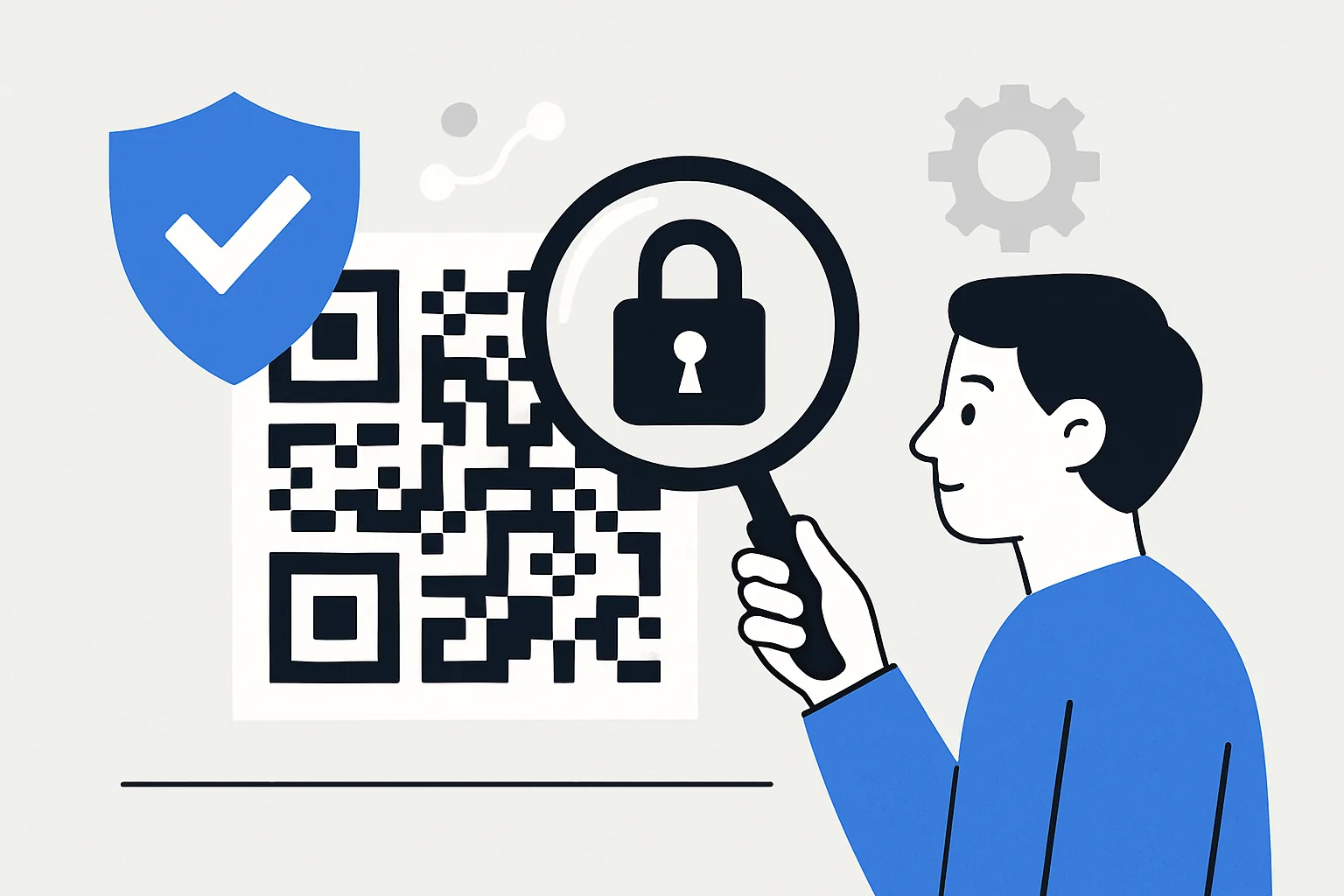
How to check a QR code for safety: step-by-step guide
The QR code has long become a household item: a menu in a cafe, a train ticket, a payment link, entry to a chat. At first glance — 2 squares and several black modules. In reality, it can also carry a harmful link, a file download, or an attempt to collect your data.
The danger is not in the QR code itself, but in the fact that it hides the address until the moment of scanning. A person sees an image, not a URL. Therefore, the question 'how to check a QR code for safety' should be asked before proceeding, not after the browser has already opened the page.
1. What is a safe QR code and what can be dangerous about it
A safe QR code leads where it promises: to the official website, login form, menu, or payment page of a verified service. The scheme is simple: the camera reads the image, the app recognizes the link, and then you decide whether to open it or not. A simple scheme. And it is this that often turns into a trap.
Phishing is the most common risk. Users are shown a familiar brand, but the link leads to a fake login page where they are asked for their username, password, SMS code, or card details. There is also link substitution: a QR code is placed over an old advertisement, and a different address is hidden inside. Malicious files are a bonus if the code leads to downloading an archive, APK, or a 'confirmation document'. Data collection through a form is also common, where they ask for a name, phone number, email, and unnecessary details.
A separate problem is psychological pressure. QR codes often hide urgency: 'Pay within 5 minutes', 'Confirm delivery now', 'Otherwise access will be closed'. People react faster to such pressure than to a long email text. This is precisely the calculation.
2. When to check a QR code especially carefully
The first alarming case is a sticker in a public place. At a bus stop, in a stairwell, on a terminal, on a table in a café. If a QR code is placed over another, that is already a reason to stop for at least 10 seconds and check if an old edge of paper is sticking out.
The second risk is a letter or flyer where the QR code was sent unexpectedly. Especially when the text contains only one phrase: 'Scan to claim your prize' or 'Review the document.' It’s even worse if the code came from an unknown sender in a messenger. There, any file or image can look 'like it's from the bank,' but it may not be.
The third scenario is a request to urgently click a link or make a payment. Urgency is almost always a bad advisor. If you receive messages about fines, blocking, delivery, refunds, or 'the last chance,' it's better to take a pause. 2 minutes of checking is cheaper than 2 weeks of disputes.
There is also a practical check based on context. The QR code on the museum's official poster usually leads to the museum's website. A QR code on a printout without a logo, address, or explanation is already less convincing. And if there is only the phrase 'click here' nearby and no details, trust drops to zero. Here, checking the QR code before scanning is especially useful.
3. How to preliminarily assess a QR code without following the link
Start with the appearance. The square should be neat, without signs of re-sticking, misalignment, blurred edges, and a 'rushed' print. If the code is printed on a sheet, look at the paper at an angle: sometimes a sticker reveals itself with a glare, uneven edge, or a different shade of white.
Then evaluate the source of placement. On a company's website, in a bank's app, on an official invoice, the QR code is usually accompanied by an accurate explanation. On a random bulletin board, in an anonymous chat, or on a flyer without details, trust is lower. And here, no complex analysis is needed: 1 inconsistency is already a reason to be cautious.
The accompanying text also says a lot. If the name of the organization, address, order number, or specific service is indicated nearby, it is better than a blank image. However, if the text plays on emotions — 'urgent', 'no registration', 'only today' — the risk is higher. Printing over an old QR code is almost always noticeable, especially if the old information partially shows through.
It is useful to compare the code with what you have seen before. Banks, delivery services, or stores usually have their own style: logo, short text, unified template. When the QR code looks foreign, and the text nearby is poorly written, do not rush. Sometimes a crookedly stuck piece of paper says more than a long instruction. This helps to understand how to recognize a phishing QR code.
4. How to safely scan a QR code on your phone
It is better to scan the QR code with the phone's built-in camera rather than an unknown app from the first store you find. Open the camera, point it at the code, and wait for the phone to recognize the link. Do not click on the pop-up window immediately.
First, look at the address, not the page title. Modern phones usually display the URL before opening the site. If the string looks strange, don't rush. One extra character in the domain can already lead to a fake page.
A good habit is to disable automatic redirection if the app offers it. Click only after checking the domain. And yes, do not enter data in the first form you see, even if the site looks legitimate. It's easier to copy the appearance than the security.
If the QR code leads to a file download, stop. APK, ZIP, EXE, macro documents, and 'install update' are the most unpleasant options. For a phone, one such file can become a problem, especially if unknown sources are allowed.
5. How to check the link that a QR code hides
The main thing is the domain. Don't look at the pretty part of the address, but at the main site. If there is an extra word or number before the bank's name, it could be a substitution. Examples like bank-login.example or example-security should be read slowly, literally character by character.
Subdomains can also be misleading. Attackers love to insert a familiar name in the middle of a long address so that the eyes catch the brand rather than the end of the line. Therefore, check the very last part of the domain. That's often where the catch is hidden.
Typos are an old but effective trick. One letter, a rearranged character, an extra dot, the English 'o' instead of the number '0' — and you are already on a different site. Pay special attention to link shorteners: a short address is convenient but hides the final site. If the QR code leads through a shortened URL, it's better to reveal it in a safe check.
The protocol is also important. Having https does not guarantee honesty, but the absence of protection on the login or payment page is a bad sign. If the site asks for a password, card, or code from SMS, and the address looks strange, close the page. Strange characters in the URL and extra parameters after the question mark also deserve attention, especially if they look like a random string of junk.
6. What tools help check the security of a QR code
The first tool is online link checking. First, extract the address from the QR code, then check it through reputation analysis services. Browser checks, antivirus services, and reputation databases are all suitable for this. If the site has been known for phishing for a long time, services often show this.
The second option is a separate device. If there is an old smartphone without personal data, you can open the risky QR code there instead of on the main phone. This method is not ideal, but it reduces the consequences. It is even safer to work in a virtual environment or sandbox when dealing with suspicious files and pages.
Browser warnings are also useful. Chrome, Safari, Firefox, and many antivirus programs can warn about suspicious sites, harmful downloads, and fake login forms. Do not ignore red screens. One click on 'open anyway' can sometimes cost more than installing a protective extension.
If you need a reference on general digital hygiene, you can check the material how to check a website for fraud. The logic is similar: address, signs of substitution, trust in the source. And if you want a short break from anxious scenarios, the site has jokes about students. jokes for free. short ones — sometimes 3 jokes are more useful than an extra 3 minutes of panic.
7. What to do if the QR code seems suspicious
The first action is simple: do not open the link. Even if the code has already been scanned, it is still not a problem. The problem starts when you go to the address, enter your password, card number, or confirmation code.
If the page has opened, do not download files and do not agree to install applications. Close the tab. After that, delete everything that might have been saved automatically: downloads, documents, unknown APKs. On your phone, check the 'Downloads' folder, and on your computer, check the download history.
Next, run the device through antivirus and check if any new applications, extensions, or strange permissions have appeared. If you have entered your password, change it immediately. When entering banking information, contact your bank. A 15-minute call is better than a long dispute over transactions.
If the QR code was placed on someone else's site — in a store, at a bus stop, in an office — inform the owner or administration. They can remove the sticker, replace the poster, warn other people, and check the camera or flyer again.
8. How to reduce the risk in the future
Scan QR codes only from familiar sources. It's basic, but it works. The menu at your favorite café, a ticket from a carrier, a code from your bank's personal account — these are not the same as a notice on a pole or a message from a stranger. One trust here is worth more than ten conveniences.
Update your operating system and applications. Fresh versions of browsers and cameras are more likely to receive protection from harmful sites, substitutions, and dangerous downloads. If a phone lives for years without updates, it recognizes threats worse. And yes, it's boring. But it's safe.
Enable browser protection, safe browsing, and warnings about dangerous sites. Check if the app is asking for unnecessary permissions: access to contacts, camera, files, and SMS without reason. One extra permission can sometimes be more important than 10 pretty icons.
When a QR code urges you to pay urgently, enter a password, or confirm your identity, it's useful to pause and compare the situation with ordinary logic. Official services rarely require haste. And if you need another way to quickly distract from suspicious links, take a look the most brutal experiments of psychologists — there are also plenty of stories that make you pay more attention to any screen.
And finally, make it a habit to check the address visually. The QR code is convenient, but it is not necessarily completely reliable. If there is at least one sign of tampering, it's better to stop.