Austrian and German scientists have first excited the core of thorium-229 with a laser
 In brief
- The Austrian-German team recorded the excitation of thorium-229 with a laser
- The laser operated at 148 nm with peak powers in the tens of petawatts
- The method could lead to the creation of nuclear clocks that compete with atomic ones
A group of physicists from Austria and Germany announced the first-ever observation of the excitation of the nuclear transition of the thorium-229 isotope through light absorption. Previously, such transitions were only recorded after the nucleus emitted its own radiation, which limited measurement accuracy.
Experimental setup
To achieve the result, the scientists required a continuous laser operating at an extremely short wavelength of 148 nanometers. Despite its relatively low power, the peak energy level reached tens of petawatts, allowing for effective interaction with the thorium-229 nucleus.
The thorium isotope is known for its unique low-energy nuclear level, located in the range of a few electronvolts, making it a potential candidate for the creation of ultra-precise clocks. However, until recently, the lack of a reliable way to excite this state limited its practical application.
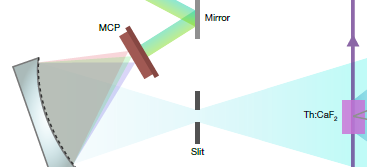
In the conducted experiment, the laser beam was directed at a thin film containing thorium-229 atoms. Upon absorbing photons, the nucleus transitioned to an excited state, which was confirmed by spectral measurements and characteristic changes in the energy distribution.
Prospects of nuclear clocks
The method obtained opens up the possibility of developing nuclear clocks that could surpass the stability and accuracy of modern atomic clocks based on electronic transitions. Nuclear transitions are less sensitive to external fields and temperature fluctuations, promising a longer lifespan and lower error.
If the technology is refined and scaled, such clocks could find applications in global navigation systems, synchronization of telecommunications networks, and fundamental physical research where measurement of time with extreme precision is required.
The research results are published in a scientific journal Nature, where the authors detailed the experimental scheme, the data obtained, and potential directions for further research.
Source: N+1