In Bulgaria, a Byzantine gold signet ring with an engraving of the name Марии Скулены was discovered
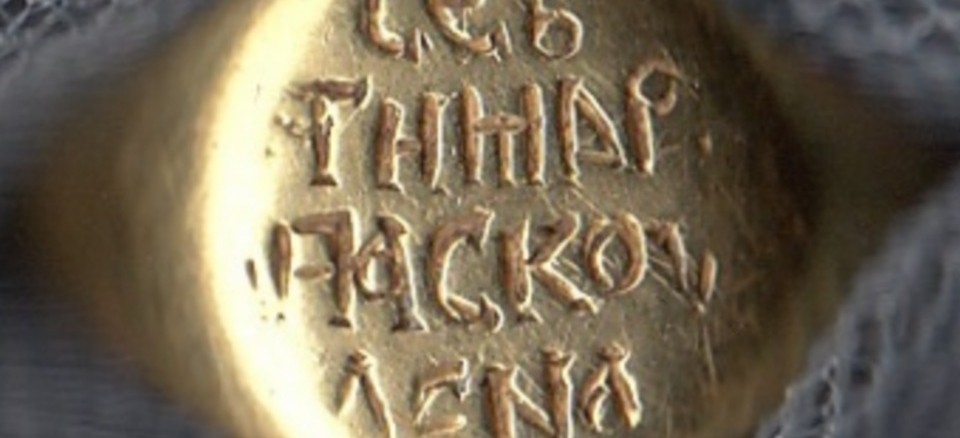
- A gold Byzantine signet ring was found near Zlatograd.
- The item is engraved with the name Maria Skulena.
- The seal was used for sealing documents.
- The find expands the understanding of Byzantine influence in Bulgaria.
Not far from the town of Zlatograd, located in the southeastern part of Bulgaria, a gold signet ring dating back to the Byzantine Empire was discovered as a result of accidental excavations. The find was reported by the famous Bulgarian researcher Nikolai Ovcharov, who has been studying the archaeological monuments of the Balkan Peninsula for several years.
The ring is made of pure gold and is shaped like a small band, with an engraving in the center. The surface is engraved with letters forming the name 'Maria Skulena'. According to experts, such a signature indicates the ownership of the item by a specific woman, which is rare for most Byzantine artifacts, where symbols or male names are often found.
According to data from the Arkeonews website, the item served as a seal – a tool for certifying official documents, letters, and other papers. In Byzantine culture, such seals were used as a means of confirming authenticity and authorship, and their presence indicates a high social status of the owner.
Byzantine influence on the territory of modern Bulgaria was particularly strong from the 4th to the 12th century, when the empire controlled significant parts of the Balkans. Archaeological finds from that time, including coins, ceramics, and jewelry, help scholars reconstruct the economic and cultural ties between Byzantium and local principalities.
The discovery of a gold seal near Zlatograd expands the understanding of the spread of Byzantine elite culture in the northern regions of the empire. Previously, similar artifacts were mainly found in large cities such as Sofia, Plovdiv, or Varna. Now researchers can suggest that representatives of the upper class, who had access to expensive materials, also lived in small settlements.
The significance of the find for history
The seal ring provides a unique opportunity to study the role of women in Byzantine society. The name Maria Skoulena, recorded on the item, indicates that women could possess official attributes of power and participate in administrative processes. This confirms broader trends noted in recent studies, where the female elite of Byzantium received education and held important positions in both ecclesiastical and secular structures.
Furthermore, the artifact raises new questions about the trade routes along which such items could have moved. The gold used in the seal's production likely came from local mines, and the engraving technique suggests the presence of skilled artisans in the region.
Nikolai Ovcharov plans to transfer the find to the National Archaeological Museum of Sofia, where it will be studied in more detail using modern methods of spectral analysis and 3-D scanning. Further research is expected to help clarify the date of manufacture and possible connections to other Byzantine seals found in the Balkan region.
Source: N+1