Turkish archaeologists uncovered an 11,000‑year‑old sculpture of a man on a leopard
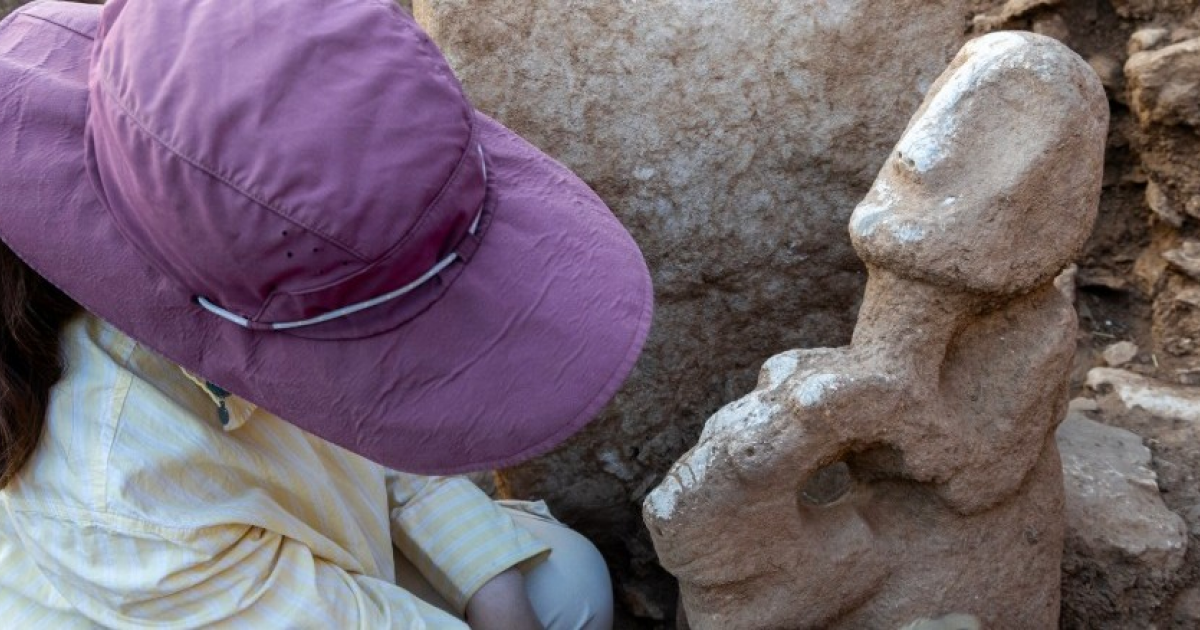
- A stone sculpture of a man on a leopard has been found in Karahan-Tepe.
- The age of the artifact is estimated to be around 11,000 years.
- The find dates back to the pre-ceramic Neolithic, revealing early art.
- The Minister of Culture of Turkey announced the discovery on social media X.
In the southern part of modern Turkey, at the archaeological site of Karahan Tepe, which dates back to the pre-ceramic Neolithic, scientists made a new discovery. A stone sculpture was found at the excavation, representing a person sitting on the back of a large predator – a leopard.
The figure is made from a solid piece of limestone and features a high level of detail: the face of the figure has clearly defined features, while the body of the animal conveys characteristic spots and musculature. According to experts, such a degree of artistic skill indicates a developed craft tradition in the region long before the emergence of the first cities.
The age of the find is estimated to be around 11,000 years, placing it in the early Neolithic period when human groups had just begun to master agriculture and animal husbandry. This dating is consistent with other finds at Karahan Tepe, where megalithic pillars and ritual objects have previously been discovered, indicating complex social structures.
Context and significance of the find
Previously, archaeologists found stone statues of animals and figurines of people in this complex, but the depiction of a person sitting on a predator is a rare and unique example. Such a combination of human and animal may reflect mythological concepts of power, hunting, or spiritual connections between humans and nature.
The discovery of the sculpture enhances the understanding of cultural contacts in the ancient Near East. Analogues of such figures have been found in the regions of Mesopotamia and the South Caucasus, indicating a possible exchange of ideas and techniques between early communities.
This was stated by the Minister of Culture and Tourism of Turkey in her post on the social network X, emphasizing that the find confirms the importance of Karahan-Tepe as one of the centers of early civilization. According to her, further research will clarify the role of this site in the formation of Neolithic cultures.
Scientists plan to conduct additional analyses, including stone microscopy and spectral studies, to determine the exact methods of material processing and possible traces of paint that could reveal the original appearance of the sculpture.
The discovery has already attracted the attention of the international scientific community. Experts in ancient art note that such finds help to better understand the symbolism and worldview of people who lived in the era when writing did not yet exist.
In the coming months, a series of public lectures and exhibitions will be held in Karakhan-Tepe, where it is planned to present the discovered sculpture along with other artifacts found in this complex. This will allow the general public to familiarize themselves with the heritage that laid the groundwork for the emergence of the first civilizations.
Source: N+1