Meta introduced the smart keychain Muse Charm with the AI agent Muse
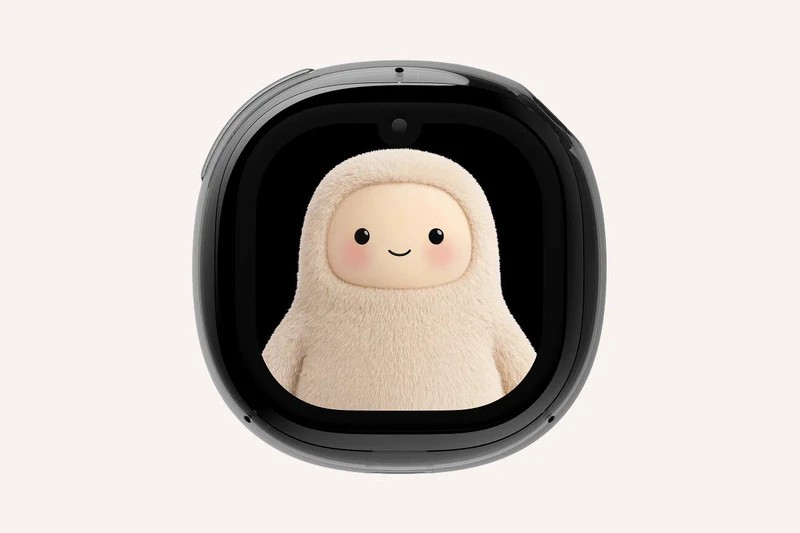
- Meta announced the smart keychain Muse Charm at the Connect conference.
- The device allows communication with the AI agent Muse without a phone
- 2-inch screen, fingerprint sensor, Wi-Fi, and 5G
- The launch is planned for the December holidays
At the annual Connect conference held this week, Meta Platforms unveiled its first product in its segment – the smart keychain Muse Charm. According to the company's head, Mark Zuckerberg, the device is designed to interact with the recently announced AI agent Muse without the need to open an app or unlock a smartphone.
From a user experience perspective, Muse Charm offers quick access to personal AI through a small panel with a touch OLED display about two inches (approximately 5 cm) in size. The screen displays a virtual character whose appearance can be customized. A built-in fingerprint sensor is provided for identity verification.
Technical details and design
The device was developed by former lead interface designer at Apple, Alan Dye, together with the team at Superintelligence Labs. Muse Charm runs on its own operating system designed for local processing of AI agent requests. The case is made of transparent material, allowing you to see the internal components, and the keychain can be worn as an accessory on keys, in a pocket, or on the wrist.
The connection is provided simultaneously via Wi‑Fi and a 5G modem, however, voice and video calls are not supported. There are small cameras located on the front and back panels that use AI to analyze the environment, rather than for user photography.
The internal code name of the project is 'Clawmagochi', a combination of the word 'claw' and the name of the popular 90s virtual toy Tamagochi. According to Chief Technology Officer Andrew Bosworth, the device is seen as an experiment to understand how users will interact with such 'handheld' gadgets.
A feature of Muse Charm is the ability to recognize other similar keychains nearby and exchange data if the owners set the appropriate parameters. A monthly subscription fee is planned for using network services, but the rates have not yet been announced.
The company announced that the finished prototype was completed in March and plans to launch mass production by the December holidays. No official price has been announced, but analysts estimate that the cost will be comparable to that of modern smartwatches, making the product accessible to a wide range of consumers.
Source: 3DNews