Finland discovers largest Viking silver hoard weighing 4.5 kg
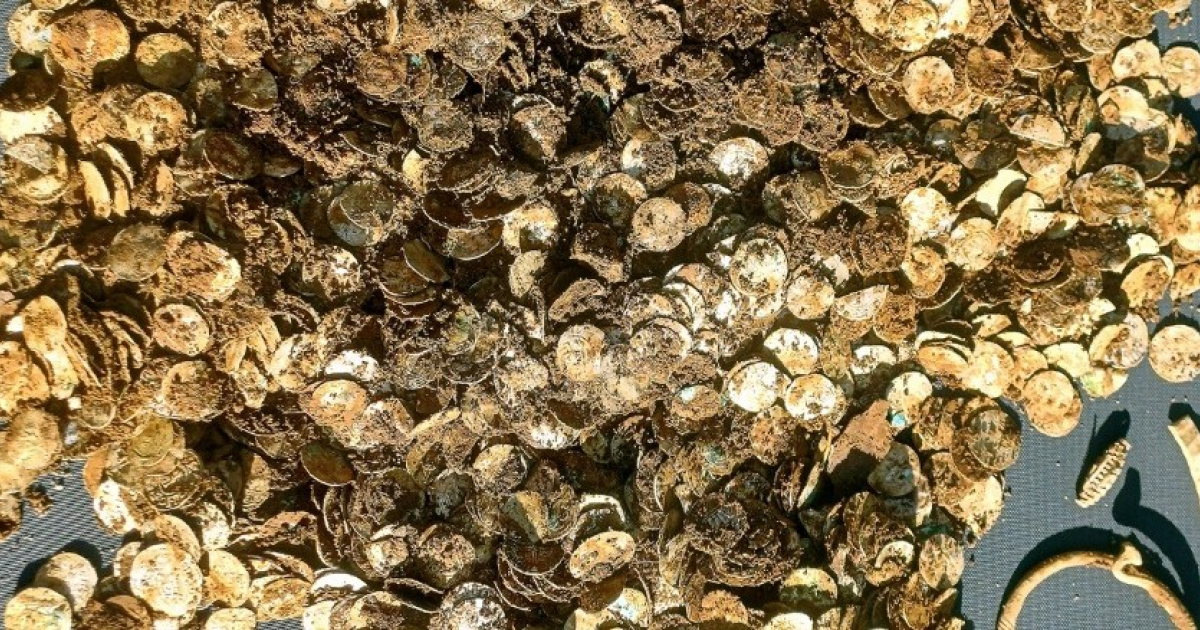
- On September 3, 2026, the largest Viking silver hoard in Finland was found.
- The hoard includes several thousand coins, a silver bracelet, and a bead.
- The total weight of the find is 4.5 kilograms.
- The discovery will help clarify Finland's role in Viking trade.
On September 3, 2026, an event occurred in the southern part of Finland that attracted the attention of both the national and international scientific community. A resident of the country, Kalle Lappinen, passionate about metal detecting, stumbled upon two birch bark containers that concealed a unique set of artifacts from the Viking era.
Description of the find
Inside the discovered vessels, archaeologists found several thousand silver coins, as well as a number of personal items: a silver bracelet, a bead, and several small artifacts. According to the Lahti Museums, the total weight of all the finds is 4.5 kilograms, making this discovery the largest in Finland's history related to the Viking period.
The birch bark containers, characteristic of the northern regions of that time, served as a reliable way to store valuable metal. Their preservation indicates favorable burial conditions and that the treasure was carefully hidden, likely for protection against thieves.
Historical context
The Viking Age (8th–11th centuries) left a significant mark on the history of Finland, where sea routes connected Scandinavian tribes with the Baltic and more distant regions. The silver coins found in this hoard likely belonged to a wide circulation used in trade, taxation, and as gifts.
Previously, only small groups of coins had been found in Finland, but this hoard, according to experts, exceeds all previous finds in quantity and weight. This opens new opportunities for studying the scale of Viking trade in the Baltic region and the role of Finnish lands in this network.
The Lahti museums have already announced plans to conduct a detailed analysis of the coins, including their chemical composition and typography, which will help clarify their geographical origin and minting dates. Results of the research are expected to be published in the coming months.
The discovery also has practical significance for the protection of cultural heritage: it highlights the need for systematic searches and monitoring of archaeological sites, especially in coastal areas where traces of ancient trade routes are preserved.
Overall, the find of Kalle Lappinen expands the understanding of how Finnish territories fit into the broader Viking economic system and serves as a reminder of the rich historical heritage that is still waiting to be uncovered.
Source: N+1