In Denmark, the largest Viking silver hoard weighing 18.5 kg was found.
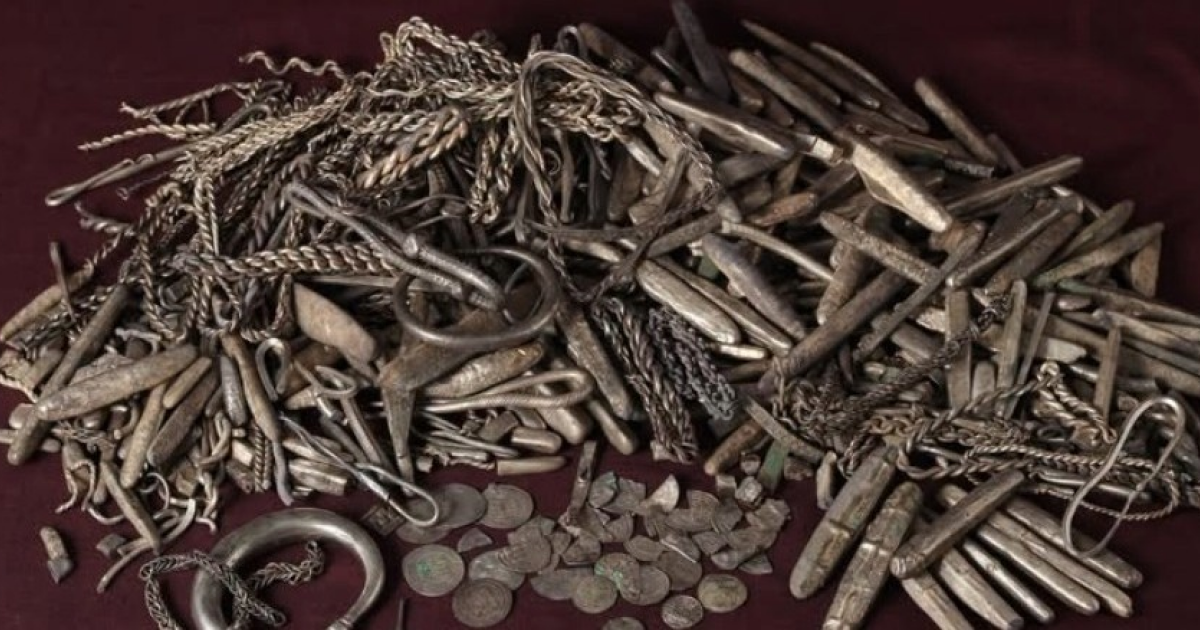
- A Danish resident found the largest silver Viking treasure in the country.
- The hoard includes about 700 artifacts weighing 18.5 kg
- Experts believe that the treasures were buried in the 10th century
- The found items will help clarify Viking trade routes
In a small settlement in southern Jutland, a local resident accidentally stumbled upon an archaeological discovery that is already being called the largest hoard of Viking Age silver in Denmark. According to the Museums of Northern Jutland, the found items number around seven hundred artifacts, with a total weight of 18.5 kilograms.
What is included in the find
Among the found items are various coins, jewelry, small ingots, and personal belongings typical of the Viking period. Most of them are made of pure silver, indicating the high status of their owner. According to specialists, such massive treasures could have belonged to a noble merchant or a chieftain who wanted to hide wealth from raids or political upheavals.
Historical context
Silver hoards are a characteristic element of Viking archaeological heritage. During the 10th century, Scandinavian warriors and merchants actively participated in international trade, moving precious metals between Northern Europe, the Middle East, and even East Asia. Treasures were often buried during periods of conflict or economic crises to protect them from looting.
The hoard found in Jutland allows scholars to better understand the scale and structure of Viking trade, as well as the social and economic role of silver at that time. Comparatively small finds from other regions of Denmark usually contain from several dozen to a hundred items, so the discovery of more than 700 artifacts represents a rare opportunity for detailed study.
Experts plan to conduct a thorough analysis of each item, including the chemical composition of the metal and stylistic features. This data will help clarify the origin of the coins, establish possible trade routes, and determine which cultures influenced the local Vikings.
According to preliminary estimates, the treasure was buried in the 10th century, when Denmark was experiencing a period of strengthened central authority and territorial expansion. During those years, conflicts with neighboring tribes and attempts to strengthen the economic base were common, which could have led to the concealment of valuables.
The discovery has already attracted the attention of international researchers and museums. It is expected that some of the finds will be displayed at the Museum of Northern Jutland, where they can become an important element of public exhibitions dedicated to Viking heritage.
For the landowner, the discovery was an unexpected event, but also an opportunity to make a significant contribution to the study of the history of their region. According to Danish law, the found artifacts are transferred to state ownership, and their research will be funded from public funds.
Source: N+1