Charged water droplets pierce Teflon and accelerate copper corrosion
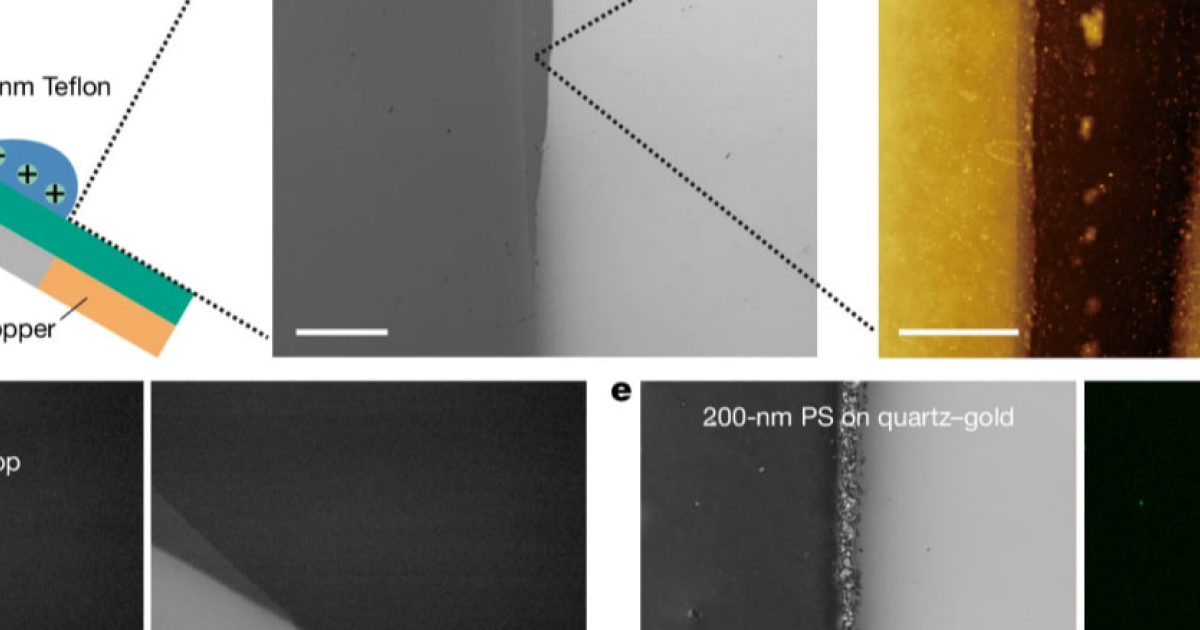
- Charged water droplets penetrate the Teflon coating of copper
- Electric charge accelerates corrosion under the coating
- The experiment is confirmed and published in Nature
- The results could change approaches to metal protection
Corrosion remains one of the main problems in industry: it leads to material loss, increases maintenance costs, and threatens the safety of structures. Traditionally, the fight against corrosion has focused on creating barrier coatings capable of isolating metal from aggressive factors.
Electric charge of water droplets
In a recent study, German physicists showed that when water comes into contact with dielectric surfaces, such as Teflon, a small electric field is generated. Charged droplets begin to behave differently: they are capable of attracting ions from the surrounding environment, which enhances their reactivity.
Experimental setup
To test the hypothesis, the scientists prepared samples of copper coated with a thin layer of Teflon. Then, microscopic droplets of water were applied to the surface, allowing them to naturally charge upon contact with the coating. Observations were conducted under conditions of increased humidity and at room temperature.
The results were unexpected: the charged droplets not only maintained their shape but also gradually penetrated through the dielectric layer, creating microscopic holes. After several hours of experimentation, signs of copper corrosion began to appear under the Teflon coating, which were not observed in control samples without charge.
Thus, the electric charge obtained by water from the dielectric turned out to be sufficient to break the protective barrier and accelerate the chemical reactions leading to the oxidation of the metal.
The discovery has practical significance for many industries where Teflon or similar coatings are used: from electronics to aviation. If under real conditions water droplets can become charged and break through the barrier, then traditional protection methods may need to be reconsidered.
The study was published in the prestigious scientific journal Nature, where the authors emphasized the need for further research on the impact of electrostatic effects on the durability of coatings. In the future, it is planned to investigate other dielectrics and metals, as well as to develop new materials that are less susceptible to such processes.
Source: N+1