A new brain implant restores speech and gestures in people with paralysis.
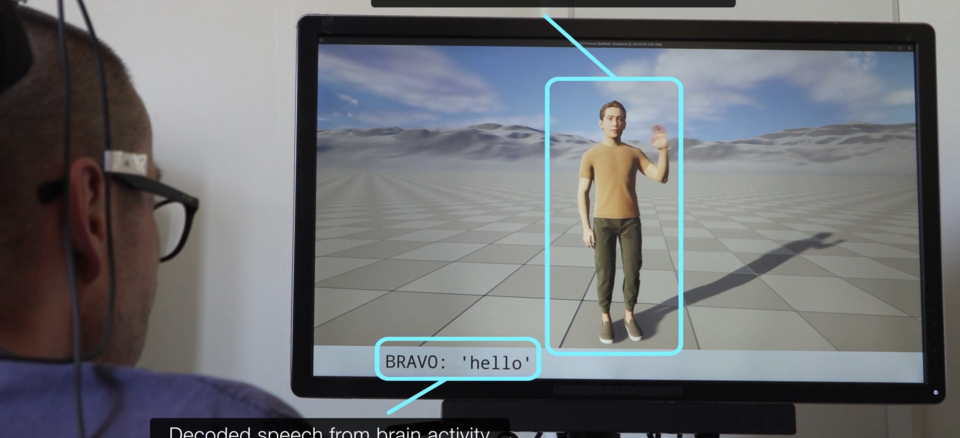
- American scientists have created an implant over the sensorimotor cortex.
- The system converts brain signals into speech and gestures.
- The results are demonstrated on patients with severe paralysis.
- The study was published in Nature Neuroscience.
A group of neurobiologists and engineers from the USA has presented an innovative brain-computer system capable of converting brain signals into speech and visual gestures. The main element is a small implantable device fixed above the sensorimotor cortex – the area responsible for planning and executing movements.
The signals recorded by the implant are transmitted in real-time to an external computer, where a special algorithm recognizes the patient's intentions. Based on this data, synthesized speech and an animated 3-D avatar displaying the corresponding hand gestures are generated. Thus, a person completely deprived of the ability to speak or move their limbs gains a visual and auditory channel of communication.
The technology is built on multichannel electrophysiological monitoring, allowing for the recording of both motor and speech patterns. Scientists used machine learning to train the model to distinguish subtle differences in cortical activity, ensuring high recognition accuracy even with a limited set of signals.
The experimental protocol involved several volunteers with severe motor paralysis, including patients diagnosed with 'locked-in syndrome'. After implantation, they were able to control an avatar by uttering short phrases and making simple gestures, such as 'shake head' or 'raise hand'. The system's response time was about 300 milliseconds, allowing for a dialogue in a mode close to natural.
The results of the study were published in the journal Nature Neuroscience, where the authors emphasize that this platform paves the way for broader applications of neurointerfaces in rehabilitation. According to their estimates, further improvement of algorithms and miniaturization of implants could lead to the creation of fully autonomous systems that do not require constant connection to external computers.
Context and perspectives
The development of brain implants has been actively advancing in recent years: from prosthetics for limbs to restoring visual functions. However, most existing solutions are limited to either motor output or speech output. The integrated approach proposed by American scientists combines both directions, which is especially valuable for patients with complex disorders.
Given the growing number of people suffering from severe neurological diseases such as amyotrophic lateral sclerosis (ALS) or severe stroke, the technology may become an important tool for social adaptation. The ability to 'speak' through an avatar without the need for assistive devices reduces psychological burden and increases the level of independence.
The authors of the study note that further trials will require longer observation as well as testing the safety of the implant in real clinical conditions. Nevertheless, the data obtained so far confirms the potential of neurointerfaces as a means of communication for people in a state of complete motor blockage.
Source: N+1